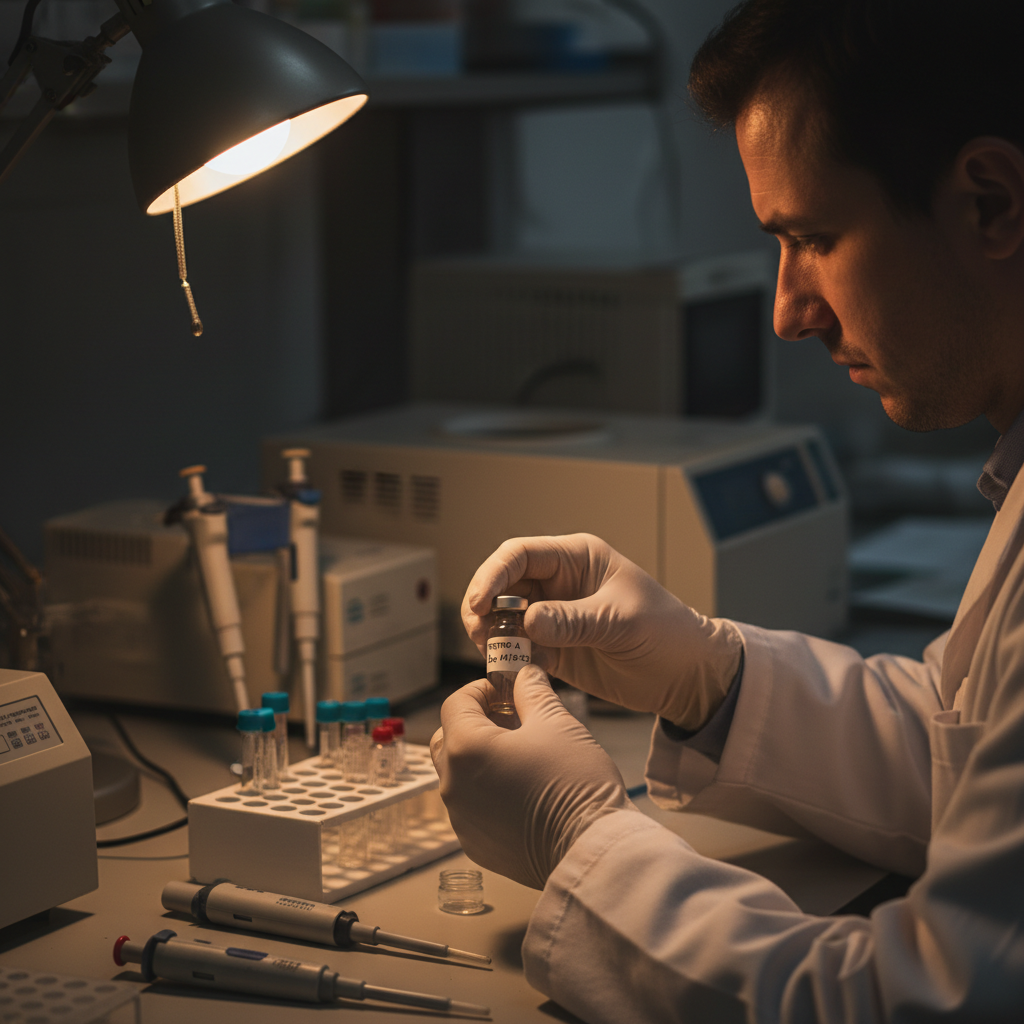
A United States Food and Drug Administration advisory committee is expected to meet in Q3 2026 to consider whether licensed pharmacies should be permitted to compound and sell seven peptides that have not undergone the agency's standard drug approval process. The list includes BPC-157, a 15-amino acid peptide that has become one of the most widely discussed compounds in the research peptide community.
The review was signalled by Health and Human Services Secretary Robert F. Kennedy Jr., who wrote on X in April 2026 that the committee would weigh the "full clinical, pharmacological, and safety evidence" for each peptide. Kennedy has argued that unapproved peptides are already widely available on the gray market and that regulated pharmacy access would be safer than the current unregulated supply.
What BPC-157 is
BPC-157, short for "Body Protection Compound", was identified in 1989 by Predrag Sikiric, a pharmacologist at the University of Zagreb School of Medicine in Croatia. Sikiric and his team isolated the peptide from gastric juice during a multi-year screening process that began in the 1980s. The compound is a 15-amino acid fragment of a larger body protection compound that Sikiric's group theorised could protect tissue across multiple organ systems by preserving blood vessel integrity.
The majority of published evidence for BPC-157 comes from Sikiric's laboratory. Peer-reviewed papers describe effects in animal models and cell cultures across a range of conditions. Few if any side effects have been documented in the published literature. However, controlled human clinical trials meeting modern regulatory standards have not been conducted, and some researchers have questioned whether BPC-157 is naturally produced in the human body, a foundational claim of Sikiric's original work.
The regulatory question
Since 1962, the FDA has required manufacturers to demonstrate through controlled human trials that a drug is safe and effective before it can be marketed. BPC-157 has not undergone this process. Federal regulation technically restricts its sale as a drug, yet the peptide has been widely available through gray-market vendors for years, marketed primarily to bodybuilders, biohackers, and researchers.
The advisory committee's review will determine whether BPC-157 and the six other peptides can be added to the list of substances that compounding pharmacies are authorised to prepare and distribute. Compounding pharmacies operate under different rules than drug manufacturers. They prepare medications based on individual prescriptions or, in some cases, for office use, without the same pre-market approval requirements.
If the committee recommends allowing compounding, it would create a regulated pathway for pharmacies to supply these peptides. If it does not, the current regulatory ambiguity would persist.
Why it matters for peptide research
The BPC-157 review sits at the intersection of two trends. First, peptide science is advancing rapidly across multiple therapeutic areas, from metabolic disease to tissue repair. Second, the regulatory framework for peptides has not kept pace with either the science or the market demand for access. Many peptides occupy a grey zone, studied in laboratories, sold through unregulated channels, but not formally evaluated through the approval pathway that governs conventional drugs.
The advisory committee's decision will set a precedent for how the FDA treats unapproved peptides more broadly. A permissive outcome could open a regulated channel for compounds that currently lack one. A restrictive outcome could reinforce the existing approval requirements and narrow access.
For researchers, the review also highlights the gap between preclinical evidence and clinical validation. BPC-157 has been studied for more than 30 years, yet the body of evidence remains concentrated in a single laboratory and limited to animal and cell culture models. The advisory committee will need to determine whether that evidence base is sufficient for compounding, or whether more rigorous human data should be required first.
What to watch
The specific date and agenda for the advisory committee meeting have not been published. The review is expected to take place in Q3 2026. The committee's recommendation will be non-binding but will inform the FDA's final decision. The review is expected to cover seven peptides in total; BPC-157 is the most publicly visible of the group.
Separately, the STAT News investigation co-published with Undark on 1 June 2026 provides the most detailed English-language account of BPC-157's origins and the questions surrounding its development history.
Sources
- STAT News / Undark, "The hidden history of BPC-157, a favorite MAHA peptide" (1 June 2026). statnews.com
- Robert F. Kennedy Jr., posts on X regarding FDA peptide advisory committee review (April 2026)
- Sikiric, P. et al., peer-reviewed publications on BPC-157, University of Zagreb School of Medicine. Indexed in PubMed
For educational purposes only. This content is informational and reflects publicly reported research developments. It is not medical advice and makes no therapeutic claims. Products referenced are for research use only. Consult a qualified healthcare professional for any medical question.